i used to be fun - The podcast
with annmarie boyle
Play Date with Cynthia Morris
September 9, 2026

i used to be fun - The podcast
with annmarie boyle
September 9, 2026
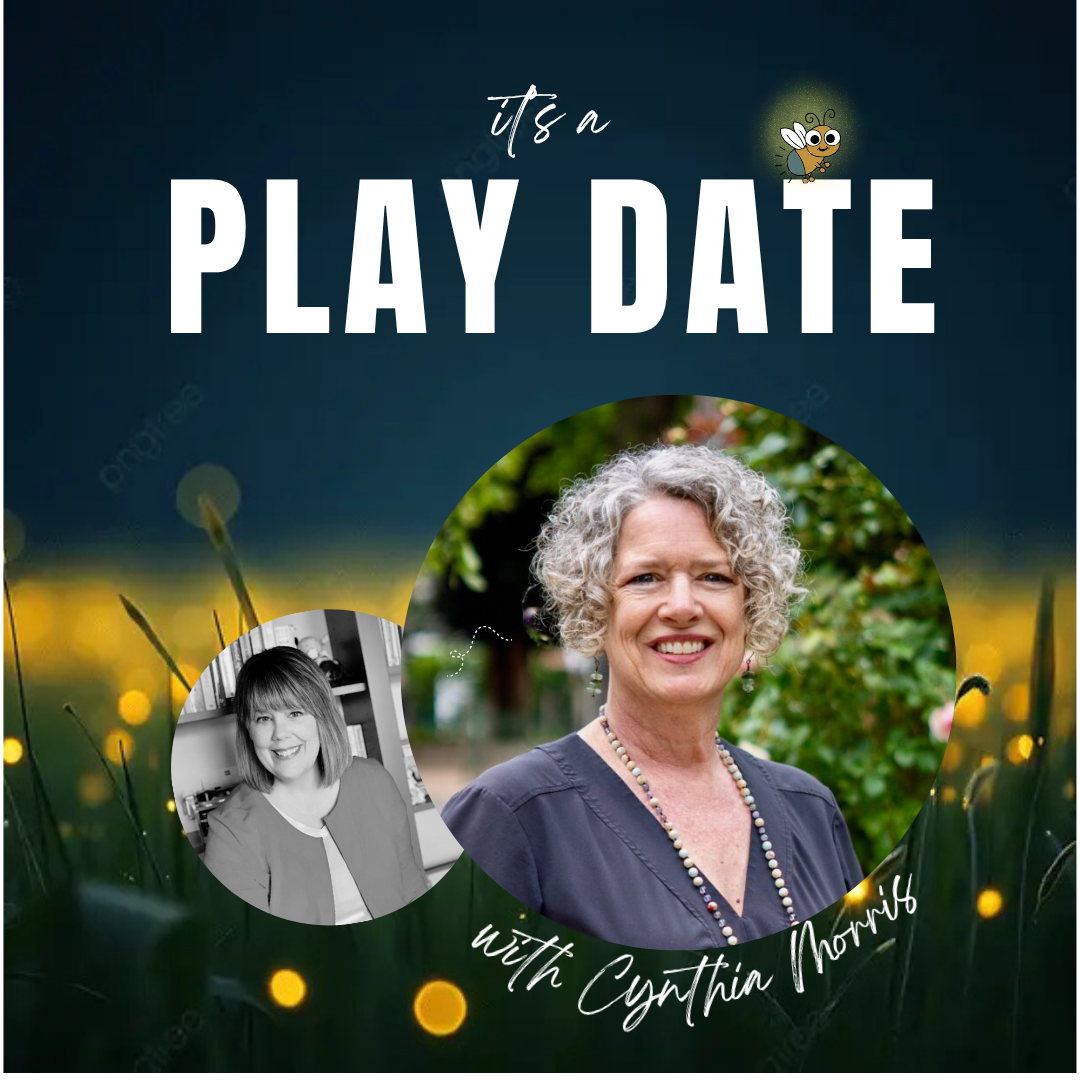
Play Date with Cynthia Morris
LISTEN TO THE PODCAST ON YOUR FAVORITE PODCAST PLATFORM:


SHOW NOTES:
EPISODE TRANSCRIPT:
Annmarie: Hey, friends. Welcome back to another Playdate. want you to grab your coffee and pull up a chair and get comfortable while I introduce you to our guest today. is [00:01:00] someone I was introduced to through our shared book editor, Kristen Tate, who you might remember from an earlier Playdate, and Kristen connected us because she had a feeling that we'd hit it off.
And after some time wandering around our guest's website and her Substack, I think Kristen was onto something. her name is Cynthia Morris, she's a whole lot of things. She's a writing and a creativity coach based in Denver. She's the author of two novels and several more books on creativity and travel, if that wasn't enough for you, she's also a working artist. She spent more than 25 years helping writers and creatives move past the blocks that keep them stuck, and her website opens with a line that feels remarkably close to what we're trying to do around here, which is, "Let's make your good life spectacular."
But what really pulled me in was something Cynthia calls an adventure resume. It's the idea, at least what I've [00:02:00] gathered, we're gonna have her talk about it too, that the moments that shape us the most rarely fit on a traditional resume or our To give you an idea, her own adventure resume includes things like working as a hot air balloon chef in the Alps. Who knew that was a job? And being an illegal dishwasher while living in a camper, moving to Portugal and falling for a young rock climber. That's right up this romance writer's alley right there, and even holding horse pose for 70 minutes, you heard that right, not one seven, seven zero, to win a contest, and if you don't know what horse pose is, you need to Google it because my thighs should not be burning all by myself here. The chapter that I mentioned about her life in Lisbon eventually became the seed for her newest novel, called "Her Lisbon Colors." go ahead and link to that in the show notes.
And so what I'm really looking forward to chatting with her today is about all of that, of course, [00:03:00] but then also creating our own adventure resume, because I'm guessing that those things are the trail of breadcrumbs that end up telling us who we really are and what lights us up the most. So Cynthia, welcome to "I Used to be Fun." I'm so thrilled you're here.
Cynthia: Well, I feel more fun just hearing you introduce me, so thanks Annmarie. I can't wait to have a conversation with you
Annmarie: That sounds great. I just wanna jump right in and talk about that headline on your website that I mentioned, which again, is Let's Make Your Good Life Spectacular. And I want you to unpack that for me and everybody listening a little bit, because how do we take what's already good and move it into spectacular?
What's your take on that?
Cynthia: I love that you called that out because as writers, every word we use has import and meaning, and we choose things very specifically. But I, I hadn't really thought about what that meant until you brought my attention to it, so I looked it up. [00:04:00] And before I give the definition, when I think of spectacular, it, it feels like sparkle, like something you're exciting about.
There's a sense of freedom in it. And then when I looked it up, one of the definitions was that something spectacular is something that causes wonder and a sense of awe. And I think that is how I feel about life. Like, wow, look at all the beauty around me. Wow, look at... When I look at my adventure resume when I first did it, it was a sense of wonder.
Oh, that's me. Wow, this is how I've chosen to follow my path and express my gifts. And I think we don't often take time to stop and say, "Wait, where have I been? What have I done? What are the choices that have made me, me?" And so there's, there's that part of being spectacular. But taking a good life, like, all right, you've achieved things.
You've... You know, you're still upright and making your way through life and have [00:05:00] relationships and everything. But most of us are, plagued by inner voices, the inner critic, these old patterns that no matter what we've done, they seem to linger. And so I'm here to help people finally clear some of that, I call it, like, the inner gunk.
Just clear that gunk that is in the way of you functioning at a higher level of happiness and joy. So that means less anxiety, less self-doubt, less worry, more emotional regulation, so that you can just kind of relax into all the, the good and great things you've created
Annmarie: I love that. There is so much there to unpack. I have this image of my body getting an oil change. Like, let's clean out, let's put a new air filter in, let's get an oil change, and there's so many things that we can have this beautiful life, and we, like you said, we still have these nagging voices behind us.
Mine lately has been, "You're [00:06:00] too old. You missed your chance." And it's just BS. We know it's BS, and having somebody out there who's willing to help with that, whether it's listening to a podcast like this or working with a coach like you, I think it's just so vitally important. But you also mentioned your own adventures, and I mentioned in the intro your adventure resume. want you to tell people, first of all, what that is, where it came from, and you hinted at a little bit of this, but what did you notice about yourself the first time you started mapping your own adventure resume?
Cynthia: I'm so glad that you, that really popped out at you when you were on my website, and thank you for describing it so well. You did a really great job. this was some... I don't, I haven't think I've invented very many things. Like, two main things that I feel like I've created that I feel make a big difference for people, and this is one of them.
It was in my early 30s after I'd become a coach, and I, I used to live in Boulder, and [00:07:00] I went, had rented a cabin in the mountains or I was house-sitting for someone. And like we do, we wonder where are we at, where are we going? And I had this idea to just do a map, like a visual map of all the things I'd done, 'cause I have had a fairly unconventional life.
I, I can't say I've ever had, like, a, a nine-to-five job. Like, well, yes, I've worked full time at a bookstore and things like that, but in terms of, like, in a corporate office or a, quote-unquote, "career," haven't had that. So, when you don't see yourself and l- the life that you've lived kind of traced in a conventional arc, you- you're kind of required to trace that yourself.
So I did that. I just was drawing little icons along, along a river on a page of the things that I'd done, and it was so cool. It was like, wow, like, the hot air balloon shaft, the going to France at age 17 instead of being at the high school graduation. [00:08:00] These choices that were clearly me and reflected me at my core, and somebody as a coach who works with values, values are very, potent core drivers for understanding who we are and understanding what we like and what we don't like.
When I looked at this, first, the first thing, Annmarie, that came up was, like, this feeling of, "I've done it. I could die, and I, I have done..." I know, and I was in my 30s. I have done it. I've helped people. I was... I used to teach vegetarian cooking classes, and, so it's like I don't have to do more to prove that I'm okay.
I, like, I've had a great life. And then the second thing that came up was just kind of my values were revealed in, like invisible ink had come out, and the values of learning and growth and travel, and I was like, "I will always have a plane ticket somewhere. I will always opt [00:09:00] for a course in ed- some kind of education.
I don't own a home, but that is, that's what I'm investing in." That's where I will ow- and still always will put my, my money into those things. So that was validating, and it also just helped reflect me back to me. and it created some sort of- like a character arc and a sense of understanding what I was about and what my life was about.
And it was so... It was empowering, it was soothing, it was validating. So I've taught that in many things. I give that to my clients. and then just curious to see and interesting to see how other people experience it and what they notice it, because it will be different than what I noticed
Annmarie: I just felt really seen in what you just said, because I have also lived a pretty or had a pretty non-traditional path, where I left corporate America very early in my career and have done a [00:10:00] lot of different things. And I have people in my life who is a high value for them, and they're, they look at me and they're fearful, and they're scared, and, "And why don't you stick with any one job?
Why do you keep changing?" it took me till well into my 50s to say, "You know what? This is just the way I'm built.
And to be able to lay all of that out, I did something not so dissimilar a while back, because I needed to see the, kind of the path of my author career, because it didn't feel like it was going as far and as deep as I wanted it to. And when you actually sit down and look at the things that you've accomplished, it's amazing, and it, to your point, really, really starts to show us what we value, and that that is really about who we are versus being countercultural or bucking the norm or, giving the middle finger to the [00:11:00] man, whatever you wanna say.
It's just who we are, and to be that accepting is amazing. Which leads me to my next question, which is, have you always been this brave and well-adjusted? Because heading off to France at 17, like, there's a lot of people who that would be scary
Cynthia Morris: I wanna go back to something you said, that I've, I wanna just h- underline before I answer that. what you said I feel is very profound, Annmarie, that it's not about being against something. It's not about being countercultural or flipping a finger to the man. It's just like I don't...
It's not that. It's like it's about being for you. This world, this life, like there's so much range and variety, and why not do what you wanna do and try things? And especially as an author, as a creative person, we are required to be that. I guess I am brave.
Well-adjusted, I think that's a lot of therapeutic work that I've done, I'm just gonna blame my parents for, [00:12:00] uh, being at work and leaving me home alone, which contributed to a lot of independence, a lot of reading novels, a lot of dreaming, and a lot of, clarity about, you know, what I didn't want. I knew that I didn't wanna stay in Ohio where I grew up, which was a, a great place to grow up, but I always wanted to go somewhere else.
I was in high school French and I s- it was my senior year, and I saw a flyer for study abroad in France, and I just was like, "That sounds cool. I wanna go." I had been saving money to buy a car. My parents were like, "All right. Do it. Go for three weeks." They bought me luggage for high school graduation, and, off I went, and that really set, lot of a life of, interested in other cultures, uh, following a French path.
I've got a French degree. So that's where it started. So have I always been that way? I guess that I would [00:13:00] say yes
Annmarie: Yeah, that's interesting because I am an only child and also spent a lot of time by myself. We lived outside of the city. There weren't kids around, and I recognize a lot of what you're talking about in there. I don't know that I had the wherewithal at 17 or 18, to go and do that. But when I look back, now that you say that, much of the desire I have in life, and also travel a lot, trying all new things.
I'm not somebody who's afraid to try new things. A lot of that did come from that childhood dreaming and that time alone, and also, I didn't want a standard life in a suburban home with 2.8 kids, and maybe the two dogs. That I would keep.
Cynthia: Sure, of course
Annmarie: But, you know, it's just amazing when this is that same thing, whether it's the adventure resume or it's looking back even further than that maybe to be like, "Oh, [00:14:00] being left alone wasn't a bad thing." I don't think it is, but some people might. But, oh, but that completely allowed me to be the person I am today, and reframing that, those types of things is one of my favorite things to do, and I think it's frankly the way a lot of us survive adulthood is by, "Oh, that's not a bad thing. This is actually really a strength, and how am I going to employ this?" So, l- let's stick with the adventure resume for a minute because there's amazing things listed on there, and I will link this, your adventure resume in the show notes for people too, because it does read a little bit like a fiction book.
Yeah, I loved it. I wanna know if there's a story that felt ordinary at the time but later became surprisingly important, not unlike what we were just talking about
Cynthia Morris: I went back and read my adventure resume when y- you sent me that question, and I was like, "No, none of that felt [00:15:00] ordinary at all." Going to France and Switzerland to be a hot air balloon chef was definitely not ordinary. one of the hardest jobs I've ever had, and something that taught me a lot about my values by having me immersed in something...
lots of things that weren't my values. So the worst experiences we have can be the best. Anyway, so I struggled with this question and I, I realized that no, not really. The only thing that came up of feeling ordinary was moving to Denver. I just ended up in Denver after college because my, uh, college roommate was coming here.
And I moved here with her and a couple other people. They all ended up leaving, and I always planned to leave and tried to find my way out. I wanted to live in California. Never ended up finding, um... I lived in Boulder for some years and back in Denver. Well, it turns out that my husband, who I met late in life, [00:16:00] lived, like, within the circle of where I, landed and always lived in Denver.
So I ended up finding him at yoga so that's, it seems pretty important. That the move to Denver, which I always wanted to get away from, ended up being the place I met the love of my life
Annmarie: It's an awesome because so many times in our lives we don't appreciate what's happening in the moment, when we can look back, we're like, "Oh, I was called there for a reason," or, "I was called to do this or meet that person for those reasons."
And not that everything has to have a reason, but a lot of times they do. And so to be able to have the life experiences you've had and then find... I think I read somewhere you didn't get married until you were 50
Cynthia Morris: That's right. Yep.
Annmarie: I mean, that gives everybody hope,
Cynthia Morris: I know. I hope so, 'cause it was rough. It was a rough seven lonely single years before that. Yeah, I, I do like that story and [00:17:00] hope, hope that it inspires people to hang in there.
Annmarie: Well, and you just never know. Like, it, it keeping in yourself open to whatever may come next is really important, and not exceptionally easy in our world because we're so busy managing things that we forget to leave space for wonder and joy and potential So one of the other things that Kristen, I think, saw in us and why we might get along is that you're a multi-passionate creator, so am I, and sometimes it's hard to link all of those things, coach and artist and many of the other things that we both do. I wanna know, and this is for me personally, and I hope everybody else gets something out of it too, how you've learned to let all those parts of yourself coexist instead of feeling like, "Oh, I have to choose one real job," or, "I have to have one hobby to focus on." How do you successfully navigate that multi-passionate life?
Cynthia: It's taken a lot, [00:18:00] but one of the... I forget who said this. This was something I heard, I don't know, maybe 10 or 12 years ago, so fairly late into it all. Do something that's valuable to people that you're paid for so you can do other things you want to do.
And so in terms of very practical, like finding coaching and training and becoming certified to be a coach and working specifically with creatives, that's always been what I would call my day job. but running your own business gives you all this space and leeway to try different things. So I've been able to, you know, design programs and lead people on adventures and write books and write articles and bring all of those, interests and skills together under one umbrella.
There's been times, you know how people are like, "You have to be known for one thing." And finally I was like, "Well, Cynthia Morris is gonna be known for always trying new things and doing [00:19:00] something different." So although I, right? I have been coaching people one-on-one in groups consistently, so doing that same job for, 27 years.
So while the, the wrapper or the structure of the different things I do can change, that, that looks the same. The thing that emerged after I finished my novel, uh, the first novel took 13 years to write and publish, was the desire to do more art, and I had been doing some art, but not as much.
So that was when I really devoted myself to my art and really like, "How do I bring the artist in to the business? How can I, you know, hire her and bring her in?" And in some ways I've done that, but, like, there's a deck of illustrated writing affirmations that I... ritual blessings that I made and stuff like that.
But she's not really so much, like, employed, and I think that's okay. I think that [00:20:00] there's, parts of us that it's good to have just not have to monetize. some of the projects that I've worked on, two projects come to mind that I really love and that have brought so many parts of me together. One was, uh, an e-book that I wrote called Visit Paris Like An Artist, and I just had so much fun with it.
It's got my illustrations. It's got short personal essays. It's got some how-to stuff that I teach in my creativity workshops. It's got a little bit of advice about Paris and then, um, photos. So it's a multimedia piece, and it's like, wow, this is really all... a lot of me all in one place. And then the second thing was what had started out as a book and became a year-long program on Substack that I'll be running again next year.
It's called Your Artist Knows The Way, and that is about how to write your own manual for creating. Like, stop reading self-help books about how to be a better creative. Just pay attention to your own habits and [00:21:00] inclinations and make notes and work from that, and so that guides you through that. And that feels like that brings a lot of me, the artist and the writer and the coach and the publisher, into one place.
you know, for... So I would say finding ways to leave parts of you out of, of a money-making imperative, just do them for fun, and then looking for specific projects that, that unify you and integrate you. And the novel, I would say Her Lisbon Colors, the s- the second novel, also brought a lot of me together
Annmarie: My books came from a similar genesis So I took my love of fiction and writing fiction and turned that into something that you're talking about too, where I have my coaching certification as well, and I wanted to kind of figure out how I was gonna weave all of this together.
And the first thing was I started doing something where I took a single line or a paragraph from a fiction book and [00:22:00] basically expanded on that idea my coaching voice. And I published it on Substack for a while. Now it goes out to my newsletter subscribers, and it feels like a way that I can express love of fiction, my coaching background, but also this idea where you said, I wrote down right away, stop reading self-help books, because I'm a big believer that fiction teaches us as much about ourselves as self-help books do. And this was a way for me to bring that in as well, to say, "Hey, this is at you from the side, and you're experiencing it through another character, which is safer, but it is triggering something in you, and it's making you think about your life."
And so, yes, it can be just for entertainment. Reading fiction can be just for entertainment, but it's also teaching us along the way. So that integration of looking for ways that think said most clearly for me are pick out the things that light you up and figure out where the center of that Venn diagram is, and is that of anyvalue to [00:23:00] anyone else. I kinda felt that way when I was reading through the description of one of your programs, which is The Paris Sketchbook. Tell us a little bit about that, 'cause that sounds amazing.
Cynthia: It is amazing. It's so much fun. I, I've been leading, uh, creativity workshops in France since 2005, and that came out of a leadership program I was in. It was, to co-lead. And so I started that with a friend, and it, it was going well, and then I just kept going on my own. doing writing workshops in France and diff- the creativity workshop under pretty much the same thing under d- different names.
And talk about learning, that was my leadership boot camp, and it really did integrate the different parts of me. when I'm doing them, they're super difficult. And so in 2022, I was... I had my podcast, Stumbling Toward Genius, and I was interviewing a friend of mine who's an American artist in [00:24:00] Paris. And, uh, he mentioned teaching, and I just got this lightning bolt idea to invite my friends to co-teach with me.
And immediately the, you know, the practical voice is like, "Well, how are you gonna do that? How is it gonna work financially? Is it financially feasible?" Blah, blah, blah. And so I kinda set it aside, and then came back, the idea, and then on a walk, it all came downloaded how to make it happen. So, this is our fourth one.
There's three of us doing it now, and we have, like, such a great, working collaboration and communication style, and it's play and fun. The focus is on fun and learning and enjoying being in Paris together as artists. So the collaboration, like the surrendering to the fact that, doing it on my own was just too hard and not...
Because I wasn't enjoying it. And now finding a way to do it a- that everybody enjoys it. It's super fun. So Annmarie, I just feel so I used to [00:25:00] say, like, "Oh, my useless French degree." I can't make fun of it anymore because I've been going to France every year since 2000, since the hot air balloon job, and continuing my, my learning about French culture and language.
And, We have a great time. People come from all around the world, and, I love it, and I learn as much as, as they do, hopefully.
Annmarie: I think one of the big pieces to pull out of there, there was a lot of pieces, but said or three times about how do I make this feel like play? How is this more fun? for help can often do that for us. Like, we don't have to do it all alone. I know that we're supposed to be superwomen and that we have these great lives, but oftentimes things are more fun when you do them in collaboration with other people, when you can bring together that level of strength.
Somebody picks up what you don't like, you pick up what they don't like, and that's a good thing to look at, not only in work, but in our personal lives. I think the best and marriages work [00:26:00] that way. Like, what is it that we each bring to this that makes the other one stronger? And then eventually makes it more fun.
You can play more often because you're not carrying the whole load by yourself
Cynthia: Well, just to be honest, you're like, "Oh, Cynthia, you're, you're so brave." Collaborating is scary to me. Really not... Just would be like, "No." And, um, it took a while to get to this configuration of the three of us, but where, like, it is such a rare and beautiful collaborative connection. And the same with my husband.
Like, I broke up with him twice. I tried to get rid of him, that he was so perfect for me, and he's like, "You're just scared." And I'm like, "Ah." So, I would say, you know, if you look at my adventure resume, like, oh, like, oh, look at all these great things. None of them were done without fear. On every trip, every flight to France or anywhere else, I'm, uh, there's a moment of terror.
"What am I doing? Why didn't I stay home?" Like, and then that passes, [00:27:00] but, so I don't wanna... You know, someone told me, like, "Oh, you're fearless." I'm like, "That is not true." I am, but,
and this is relates to creating anything. Like, it's not easy. It's gonna be scary. All of your stuff's gonna come up, but you, you evolve and grow by staying with it.
So everything I do has been part of my, my personal growth path
Annmarie: Great way to look at it, really healthy way to look at it, where you are those fears and deciding, "Is this one that I'm gonna walk into? Is this one I'm gonna walk away from?" And then really just being kind to yourself and offering that grace that we need. Like, you know what? Nothing's easy the first time. Nobody's done something until they've done it. giving ourself that expansiveness, I find, is what allows me then to walk into something new. Yes, I'm still scared out of my mind. Like, I'm, I don't know, 15 episodes into this podcast, I still think, " [00:28:00] Am I gonna do this one okay?" You know, every time, and I expect to feel that way for a good long time.
And we were talking before we got started that I keep asking our mutual editor, "Should I go back and edit my first book?" Because I know I could do it better now. Well, yeah, that's growth, and yeah scary to put something that vulnerable out into the world, but it's okay. It's okay that it's not perfect. So that really gets to something I think a lot about these days, it's permission. And so many women don't seem to need more information, which you're probably finding since you said, "Stop reading the self-help books." They need permission to pay attention to the things that light them up and not to just walk away from the things that maybe initially scare them, as we were saying. Tell me if you think you've found that in your practice with other women, and then if so, I'm leading the witness here, I know, where that permission usually comes from.
Cynthia: I, I do think, you know, like, [00:29:00] permission is something that people think about and they might, or might realize or think they need. I do not like that. I do not like that word. I don't like it because it seems to come from outside and from some hierarchical, "You're allowed to do this." I understand what you're saying in terms of this feeling of needing that.
I prefer to look at it as what we need is recognition. We need to recognize who we are, what our gifts are, what our skills are, what we've done that can contribute to what we want to do, and recognizing, "Okay, this feels really scary to sit down and write my novel, but oh, after I did it, I felt great. I felt alive.
I felt sexy. I felt empowered. I can't wait to do more." So I'm more like recognize and pay attention to that feeling after and like, do you want more of that? Yes. Okay, I can sit down and get through the paper-thin tiger of fear that wants us to stop. [00:30:00] So I don't know. Permission as, as a concept does... I, I get it.
It doesn't resonate with me. I more want people to pay attention to their lived experience, to get them into a practice of writing and just to notice what shows up, to notice what works for them. So it's more about recognizing themselves and honoring that and choosing to honor that versus someone or some part of me says it's okay to do this
Annmarie: I like that a lot. I'm definitely gonna keep that and let it roll around because I do think it is recognition as well. I do think that that's a big part of the piece. Like, maybe I don't love sitting down in the chair to write, but I sure like when I'm done, and it's sure fun to look back and see what I created out of nothing. Like, when you realize that's what fiction is, that there's something so strong there, and I think when I speak about permission, but I am gonna think I'm gonna, like, tweak the way I talk about this. It's that internal permission. Like, I'm not gonna hold myself back because [00:31:00] of what somebody else says is okay. And so there's probably better words for it
Cynthia: Well, you know, but you have to meet people where they are. If that's what people are saying, "I need permission," then I would work with them on that. But you said something that struck me 'cause I hear almost everybody says this. You said, I, I don't know exactly how you said it, "I don't wanna sit down to write, but I like the feeling after."
And my first thought is like, well, don't sit down. Just maybe you're a standing writer. Every- And the, the whole, like, sit down and write is something that people say all the time, and there's something about it that feels like it's punitive, and I don't know if it's, if it's just in the language or if it's in the, like, you sit down and you focus on this, and you be quiet, and you...
Like, that's maybe, you know, some of my upbringing in Catholic school, this sense of, like, versus, like, I'm gonna do a little dance, and then I'm gonna do my standing, and I'm gonna jam on my keyboard like Tori Amos, and, you know. Like, maybe the sit down element just shuts us down
Annmarie: I [00:32:00] agree, and, uh, you know, Sir Ken Robinson, who is no longer with us but has written a lot about that very thing, that education is what has shaped us, and we don't live in a world that makes people, most people stand on an assembly line anymore, or the way that traditional education was set up. And I was that same way.
I, I mean, I was a quiet, shy kid, so I wasn't up dancing around, but I knew intuitively. I was a smart kid, and I knew intuitively that this wasn't working for me.
Hmm.
And it's funny how long it takes to back that out, right? Like, I finally came to something not so long ago, I hate to admit, that, oh, hey, I have to think circularly. I have to think in pictures. I have to mind map this out. And so yes, that, like, put your butt in the chair and write 4,000 words, that doesn't work for me either because rebel inside me, first of all, won't let it happen. It's like, "Screw that. I'm not gonna do what you told
Cynthia: That's it, the rebel that will always be like, "No, I'm [00:33:00] creative. I'll figure out my own way." So that again, that where permission doesn't really work for us creatives because we're looking for more... I think it's more like we're looking for validation. Like it's okay to be a creative kook. It's okay to be a circular thinker.
It's okay to need visual. And luckily with neuroscience being where it is, we, we understand a lot more about the brain and the varieties of experience. So I think, um, anything that's about like telling a creative person how to do it i- is just, it's just not... I, this is what I learned right away from coaching and why I like the coaching model I have.
It's like what works for you? Let's try it out. Like versus me telling somebody what to do, 'cause they'll just flip me the bird and go do something their own way. So
Annmarie: Almost because you told them what to do, not
Exactly.
bad
Exactly
my husband will tell me a lot, "You're just doing that that way because I told you to do it this way." And I'm
Right.
it's good we understand each
Right.
Cynthia: Right. And with my [00:34:00] clients, like, I can't afford to waste their time. Like, I've gotta, like, get them to where they want and soon as possible. So, so yeah. So
Annmarie: I just wanted to circle back to you were talking about the fact that we need validation.
External, internal, talk about the need of validation for people who maybe move through the world in a slightly different way
Cynthia: It's like one of three big fears that every single person I've ever coached has. It's, "Am I good enough?"
is, you know, is the, my writing good enough? And then down to a more existential question of am I good enough? And I think it's just kind of built into the process of being, uh, an artist or a writer.
We're, like you mentioned it earlier, you're literally making something up from thin air. You're pulling something out of the ether and bringing it down into a tangible thing that you want others to come into and experience. So what a trust fall. You don't know that you're good. You don't know that [00:35:00] what you're saying makes sense.
This is why writing groups are so important, taking classes, learning, having an editor, you know, there's so many... The, community and the structure around writing or creating is really important, especially writing, because this is... You probably have encountered this, where is it, this is the kind of the, the joke about the art of writing, is that we were all taught to write, so we know how to put sentences together.
But most of us do not know how to craft story. It's a real craft that we have to learn. So people sat down, "I'm gonna write my memoir. I know this story. I'm gonna just, you know, get it all out on the page." But there's no character arc, there's no point, there's no... And so the learning curve is steep and humbling, because everyone thinks it's 'cause they're not good enough.
And like, it's not that, you just are learning a craft. And I even felt that. I wrote my first novel, it came out in 2012, and then my second novel came out [00:36:00] in 2025. I cannot believe how much I learned about writing a story from the second novel. It's like, well, I l- didn't I learn all that before? Maybe. But I've changed, the world has changed, writing and publishing has changed.
So e- even somebody who's been writing for 30 years, still has to learn. Luckily, learning is my, like, one of my number one values, so I'm, I'm up for it. The only way through it is just to keep practicing. It's a lot of humbling moments.
Annmarie: It is. And the validation piece that I have often said to people is, you know, if you listen to enough self-help gurus, and listen, I have some favorites in the world. I am not here to put down personal development because
No
a lot of help from books and different people along the way. But of the things you always hear is, "Well, you shouldn't need external validation.
You shouldn't need external
No,
I
no. I don't, I don't know anyone who doesn't[00:37:00]
want some feedback, I wouldn't first give it to an editor, and I certainly wouldn't publish it.
No
know, I think we need to hear that,
and again, maybe,
not just
yeah,
Cynthia: and maybe validation is the wrong word. Not to get all precious about what word it is, but it's part of, like, being seen, being recognized. Like, y- yes, I get you. Like, being gotten. This is why you're doing this podcast, so you can have these conversations where people understand y- you know, like you said, we're just having coffee.
It's fun to hang out and talk, and then listeners are like, "Oh, they get me. I get that." That is super important. And then in terms of, you know, am I good enough? I think that's only gonna be found through doing a lot of practice and writing and, and support and editing. Uh, Kristen, I gave her my first draft.
It was a big, bloated thing. It just had everything in it, and she came back with priceless 26-page editorial letter, 500 [00:38:00] comments on the document, and a scene spreadsheet. And Annmarie, that was a year of master class working through that, studying that. That document is, like, tattered and just, Thank goodness for that.
So it wasn't validating that it was good or I was good, but it gave me... I was seen, I was cared about, my work was cared about, that rapport of like, "Yeah, this matters. Work on it."
Annmarie: She took you seriously. I always get worried when there aren't very many comments, because I'm like, "Okay, so I know it's not that good. Are they just ignoring me? Is it that bad?" You know, I actually go the other way, unfortunately, if I get too little.
And I, my StrengthsFinder, I'm a number one learner, second input, something in that range. And so the same thing with you. I've told Kristen many times, like, "I'm not precious about my work. I'm here to learn. Like, let's make this better together." And there's, you know,[00:39:00]
Cynthia: I just wanna emphasize what you said. There's nothing wrong with needing validation, and some more than others, and some, you know, um... If it stops you, that's when it's a problem because it's like, oh, you're not getting the level or kind of validation that you feel you need, and that's, that's like a deeper issue to work with, if that makes sense
Annmarie: I wanna circle back to one little tiny thing you said too, something about we don't wanna get precious with the words or precious with the semantics, but sometimes that is what we need. Whether we're a creative or we're just moving through life in a different way, is the minute I cut myself some slack around my writing was when I told myself, "Oh, you're not a writer, you're a storyteller." I could own the storyteller. I couldn't own the writer. And so sometimes that preciousness about words makes all the difference in the world. It's even like how we
Thank you
for ourselves. What does that look like? Maybe it's baking bread. [00:40:00] Maybe it's doing a spreadsheet at work. It doesn't have to be paint on canvas
Cynthia: Yeah. Thank you. Yeah, you're right. I just love words too. W- that's one of the reasons I like to write and read is words are just really fun to me
Annmarie: Yeah, me too. I've spent my whole life surrounded by words in some way, shape, or form, or my whole professional life. And
Cynthia: They're fun
Annmarie: yes, I, I can't get away from it, and, uh, I like to talk too. So, you know, it's all of those things but into one. We are getting close to wrapping up, but I wanna dig into one more thing, one more thing on your website that really stuck with me, and this is a little bit about taking your life from good to great or good to spectacular. I just clipped it a sentence. I'm not gonna give you the full sentence, speaking of. said, "Accomplished and still stuck." So I think a lot of women, if they consider themselves a creative person or not, really knows exactly what that feels like. And so as a coach, where do you even begin when [00:41:00] you've checked every box, you're by all cultural expectations successful, and something still feels like it's missing?
Cynthia: I think, everything starts with being honest with yourself, and then being, specific. So something's not working for me. Something doesn't feel right. Okay, what is it? I don't know. Okay, well, get curious. Go through your day.
Notice where things feel off. Oh, every time I'm in conversation with that person, I feel not me, or every time I go to this environment, I don't like it. So just an example, and I would s- like use this example for the internal experience. I remember having my, my office and just being like, "I never wanna go and sit there.
I never wanna go sit there and work." So it's not like something's wrong with the work, but let's start... What's not working about this setup? And I was like, "I don't like the way the desk is facing the wall. I don't like this. I don't like this room." [00:42:00] I ended up taking over my whole living room of my, um, apartment for my office.
But I just broke it down. So if you g- and an internal thing, like what's not working? I don't feel good. My stomach feels tight when I go through this experience. And then you can make a list for yourself and start noticing where specifically things aren't working. And then I would say, doing your values, getting clear on your values is a way to kind of as a Geiger counter for what's working, what's not working.
And then, um, getting help. Often the clients I work with don't even know that it's this stuff underneath that's running the stuff up here. So a lot of times people will come for, "I wanna be more productive. I wanna have a better schedule. I wanna get this done." And we do that, but before we get there, there's a lot of that inner gunk that needs to be addressed and taken out, 'cause no amount of like using a [00:43:00] timer or word count or there is, is...
There's some people who just need more, more inner work under the engine, under the hood
Annmarie: Say that's probably most of the time what we need to deal
Yeah
I jokingly say to friends and people that I'm working with, like, "You are not gonna Pomodoro method your way out of this." Like, there is something else going on that
Totally
out. And in fairness, sometimes those things are very difficult to figure out.
We don't always wanna look at them. They don't always seem like, "Oh, I, I don't, I don't think I have a fear of judgment." You know, like we- we're not owning up to it. And then there's another piece that triggered when you were talking is taught in our culture that we are supposed to need to suffer, that things are supposed to be hard. yeah, you know what? Things are hard. diagnoses are hard. Divorce is hard. Raising children, nothing harder. suffering is different than that, and it doesn't have to be... Like, [00:44:00] I got so tired of people telling me, 'cause I knew it was a reaction to their fear of my untraditional lifestyle, of like, everything can be fun, Annmarie." Well, no, not everything can be fun, but there's joy in everything, and if you look for it, you can find it. and so maybe getting rid of that idea that if it isn't hard, we haven't done it right or we haven't worked hard enough. Your thoughts on that?
Cynthia: And everything should be hard?
Annmarie: Yeah, that everything is supposed to come with a level of suffering.
Like, if it didn't hurt, you didn't do it right
Cynthia: No, I don't, I don't believe that. I do think writing is very hard. And creating things and putting them out into the world is very hard. I think, like, if you wanna g- get some therapy on yourself, like set up a business or take up an art form because all of your stuff's gonna come up. And that is what people don't realize, that the, oh, the job is the inner work.
And when I wrote my novel [00:45:00] and some of the things that... it was the m- one of the most therapeutic things I had done to that date, was to write a novel based on my own experience. And I realized that the whole thing that a novel relies on is emotion and helping people feel emotion. And I was like, "Oh, my goodness, that's me.
I'm such an emotional, sensitive person." And oh, my gosh, that's me as a coach helping people go into these emotions and feel these emotions and acknowledge them and their value and that they're, they're okay even with this range of feelings. So again, how fiction and writing and our creativity can make us whole, it's not because it's easy all the time.
It's because it's a process that we undergo. You cannot write a novel and not be changed. I don't care who you are. And so you know, the people who come to work with me are, are interested in, being more who [00:46:00] they are, being more true to themselves, not being better or some other like shiny version, but just being more themselves.
So, that process of staying with their creativity, staying with their inner life is something I really, I really love being part of. And it's the same as reading a book. I'm in these inner lives of all these characters and the, and the novelist. It's just, real true play for me
Annmarie: Me too. I, I am able to be one of those people that can write books and still enjoy reading. Not everybody can do that. I do read differently, can still really, if it's a good book, I sink into that world, and you're sad when it ends. I mean, I was sad when my... I have a full, complete series, and I thought, "W- well, these are my best friends now.
Where are they gonna go?" So to your point, you really do any kind of writing, I think, fiction writing, journaling, whatever it may be, there's something in the act of writing for me that brings things [00:47:00] out that other things don't.
Totally
people will ask, you know, " Which one of the characters is you?" 'Cause of course, that, that's just a really common question for whatever reason for people that aren't writing, and I said, "All of them.
They're all me." You know, in, in the first one, I wrote about a woman who felt like she had lost her identity. Okay, a little bit of that's me. And the second one is, is somebody who's dealing with anxiety. Yep, that's me too. the other bits around her is not me. That's my creation of, new, brand-new person in the world. there is a drip of me through everything, and I believe that that is the way that you find your way through the story, that you find the joy in writing. and that might be even something people could take who aren't writing, who aren't doing a traditionally creative job. Like, what's the through line in your journaling?
What's showing up? What, to your point of putting everything together, what are the things that are lighting you up? What are the things that are making your stomach hurt? Pay attention to [00:48:00] those. Our body tells us so much
Cynthia: Yes. And you don't... Anything you're in, like a big thought circus loop around, it's just you don't need that. Just like what you said, like, am I alive when I think of that or does that drain me? It's very clear and that's why the first step is being honest 'cause it's hard to admit like, oh, I don't like that relationship anymore.
Oh, I don't really like going to write in cafes anymore or whatever. So yeah
that's
Annmarie: just the thing, it can run the gamut of small to large. Uh,
Yep
like my office is something you can easily change. I'm not happy in this relationship is a whole
Yep
But they deserve us to, to really explore them because life is short, and
Totally
miserable not move to spectacular, I feel like we're missing out on something.
And of course, it's a journey for all of us. Like, there are days where I feel spectacular, and then there are days where I'm not even g- to good. So let's not... I don't want anybody to think out there that I, I have the
Cynthia: No, it's not. No, and this whole thing like every day you're supposed to [00:49:00] leap out of bed feeling great. Like, that's not the metric for having a spectacular life or just enjoying yourself more. It's, it's being true to yourself. Like, I'm lying in bed for a while now. I'm sleeping in. I'm not vacuuming today or whatever
Annmarie: Yep. That's letting ourselves off the hook a little bit and just allowing ourselves to be human. So I like to end each episode with a question, I'm going to ask this one for you to share back to our listeners. But if we're gonna come back to the adventure resume, bring this full circle, and if someone listening has just grabbed the nearest scrap of paper tonight and wanted to start their own adventure resume, what's the very first question you'd tell them to ask themselves?
Cynthia: The adventure resume is pretty simple. It's really just a timeline, so you can start wherever. so I guess to answer your question, what feels like adventure for you? And it's not just like, "I traveled to this [00:50:00] country," or, "I did this thing." Everyone's sense of adventure is going to be different.
So anything goes on your own adventure resume. If it feels like it's you being true to yourself, you taking a risk, you bringing your aliveness up, that's what is adventure for you. So if that word ch- also doesn't work for you, there's another word, like come up with that. I trust people to do that
I
Annmarie: love that because adventure can feel big to people, and I don't think, I agree with you, I don't think it has to be big. Your adventure could be that I went to the Lego store today and I bought myself a new Lego set. Everybody that listens knows I have a little problem with Lego,
Cynthia Morris: No, you have a passion with Lego. Come on, there's no prob- what's the problem?
the,
Annmarie: the only problem is my bank account. That's the only problem. It is not a cheap hobby. But it was something I didn't do as a child, and so I think I've embraced that now, [00:51:00] and it's super fun. It's something my husband and I do together, and so that's an adventure for me. As much as, my husband and I s- also have led many study abroad programs.
He's an academic. We've been to Australia and New Zealand many, many times,
Wow
is a huge adventure, especially when you're thinking you take 20 to 25 19 and 20-year-olds with you. For a person who's not a parent, that's, that's, that's quite the experience. Quite the adventure.
Very cool
be I carved out time today to walk down to the beach, and I just sat in the grass and I watched the waves.
That can be an adventure. I think to your point, what we're looking for are the things that light us up and the things that feel like a thread through our life. Do I have that
Hmm. Hmm.
Cynthia: Yeah, once you have them all down on the page, you'll see like, "Oh, I'll always try something new," or, "I'll always..." You see, you see a pattern. It just becomes clear where you put your, energy, your time, your money. Like I, when I realized like, this is what I [00:52:00] invest in. That's, that's what I'm about, and looking at the values underneath that.
So it's not just travel, but travel is about discovery and exploration and, trying new things and being uncomfortable
Annmarie: It's absolutely fabulous, and I have loved this conversation. I'm, can't get over how much I enjoy these conversations 'cause I learn something new every time. There comes that learner again. So if people wanna find more about you, find out more about you, your books, The Paris Sketchbook,
the coaching, where do they go?
Cynthia: So my company is called Original Impulse, and you can find me and that everything there at originalimpulse.com
Annmarie: Is your Substack the same name? I don't remember
Cynthia: My Substack is called Stumbling Toward Genius.
Annmarie: Nice.
Cynthia: yeah, that's a concept that's evolved. It was a podcast and then it became a Substack when I was writing my novel and publishing the novel, and now it's, um, if you go there, you'll [00:53:00] see the art and essays that I've been writing after a recent trip to Japan
Annmarie: Oh, fabulous. All right,
I think that's gonna wrap us up for this week. So Cynthia, thank you so much for being here. This was so fun
Cynthia: So fun. Thanks, Annmarie, for having me.
Annmarie: So I hope you enjoyed listening to my play date with Cynthia, and that you were inspired by both her adventurous spirit and her adventure resume. I'm gonna map mine out soon, and I hope you think about doing the same. And thanks again for taking time out of your week to listen to I Used to be Fun. And until next week, I hope you keep uncovering a little more beauty, a little more creativity, a little more of yourself, and yes, of course, a little more fun
I Used to Be Fun is hosted by Annmarie Boyle. New episodes drop weekly.
Music from Uppbeat (https://uppbeat.io/t/soundroll/to-the-top), License code BC9SEN3G6PMABOA

Ever look up from your wildly competent, totally responsible life and think "Wait... I used to be fun"?
Welcome to the podcast that helps you find that version of yourself again—you know, the one who didn't need a reason to dance in the kitchen or laugh too loud. Each week, we explore the art of choosing joy in midlife, sharing stories and strategies for bringing play and creativity back into our lives.
Not as some self-improvement project, but as a way back to ourselves. Because being a grown-up doesn't mean we have to be serious all the time.